The Pinter Hotel

April 30, 1982

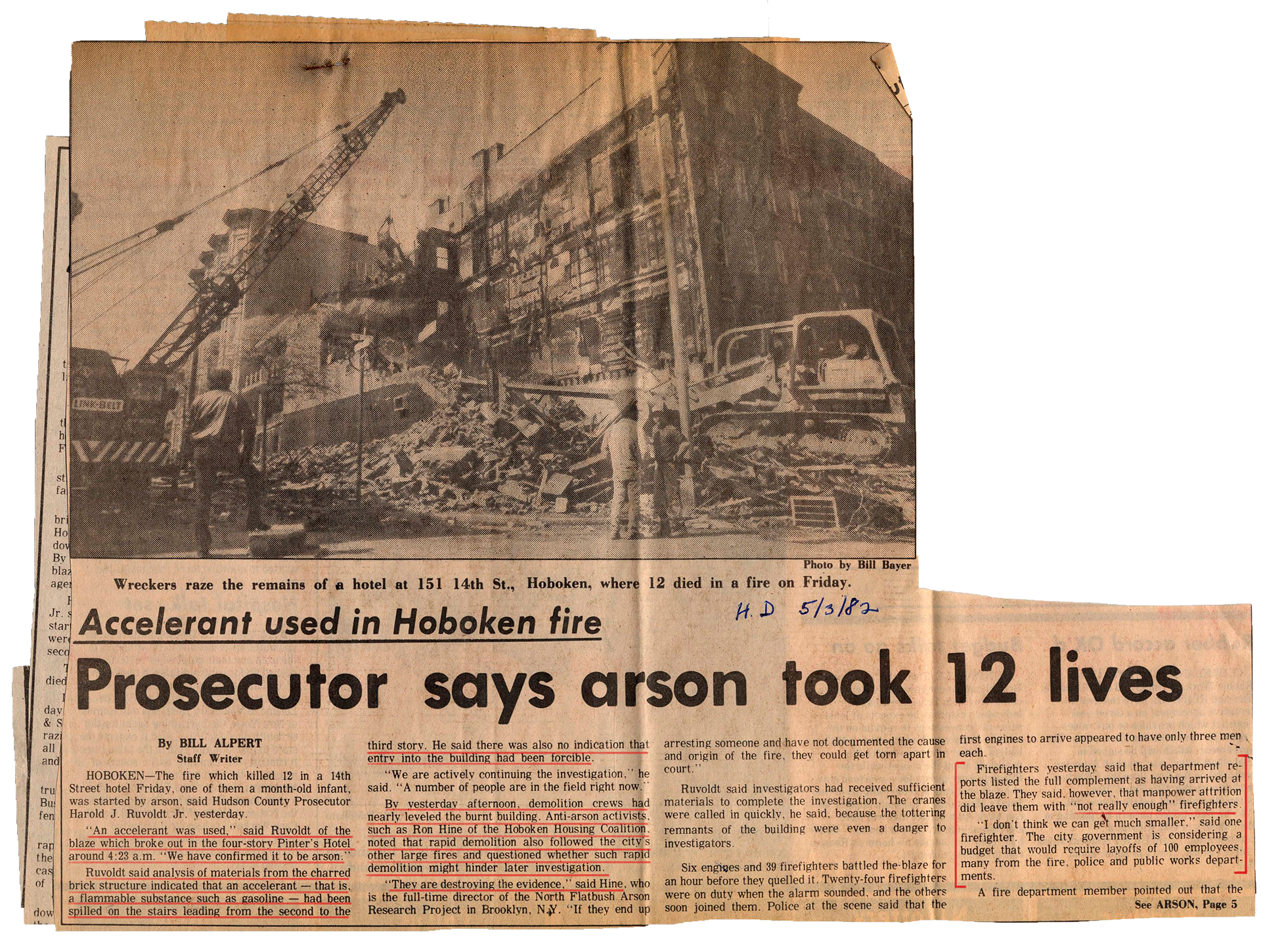
On April 30, 1982, an arson fire decimated the building known as the Pinter Hotel located at 151 14th Street. An accelerant was used to start the fire which began on the 2nd floor. 13 people including an unborn child died in the fire. They were; Anna Hilda Perez (48), and her grandson, Angel L. Perez (8), Luz Delia Garcia (17), her son, Jorge Negron (1), her daughter, Erica Negron (3 weeks), Olga Garcia (22), and her daughter, Catherina Torres (4 months). Also killed were Francisca Vasquez (42), Juan Serrano (32), Charles Serrano (3), and Ismael Vasquez (15). As well, Maria Colon (20),and her son, Luis Xavier Colon (4).
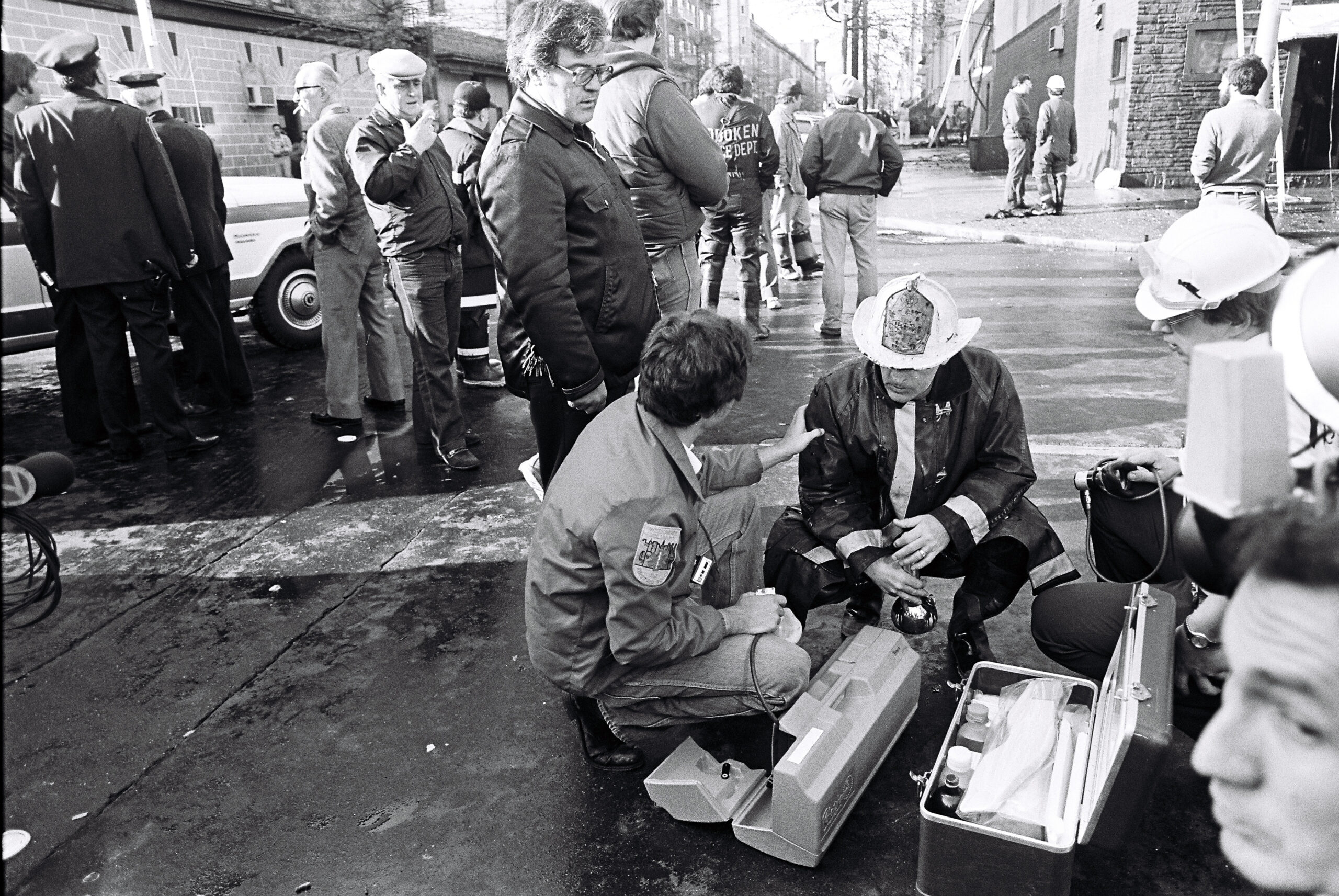
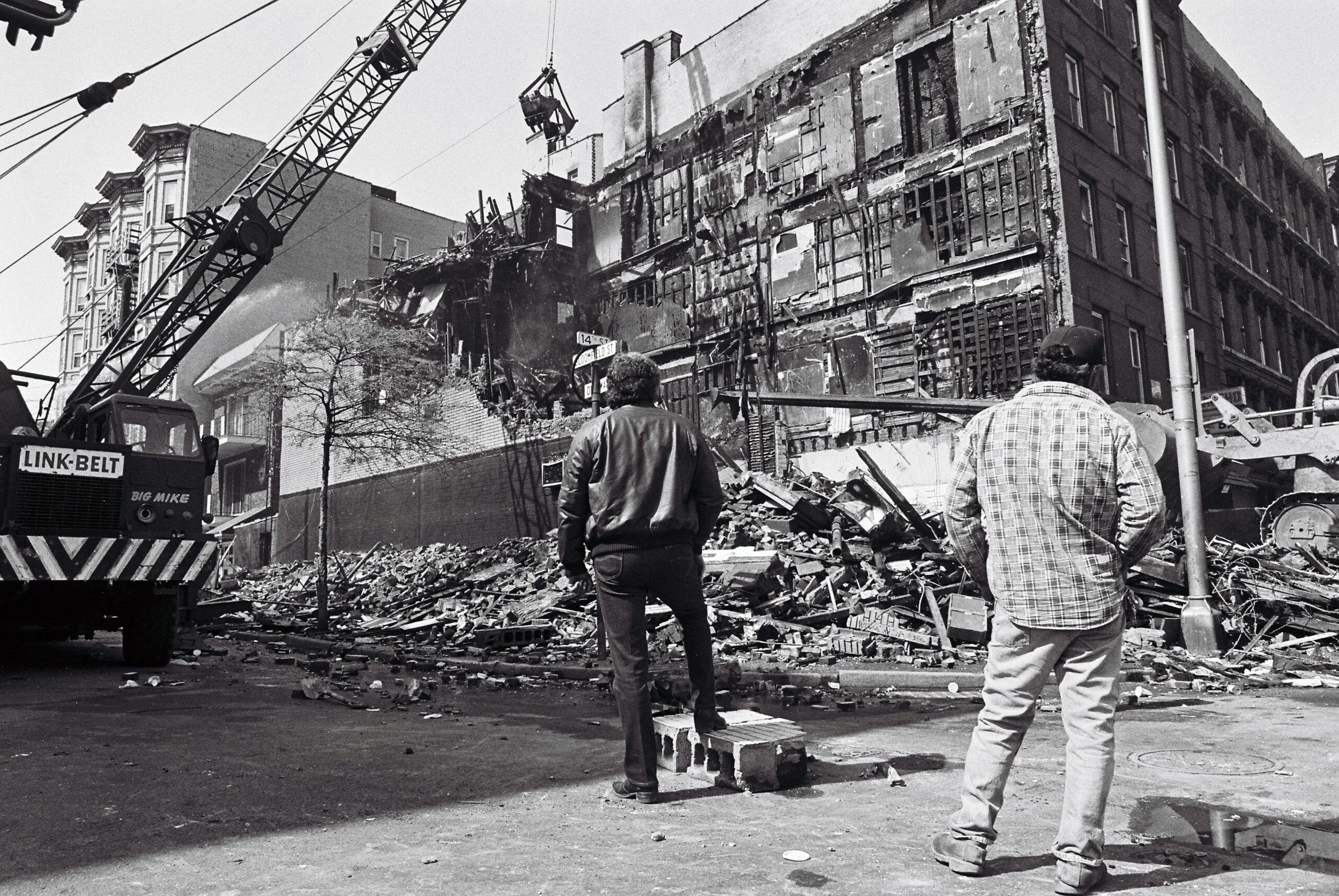
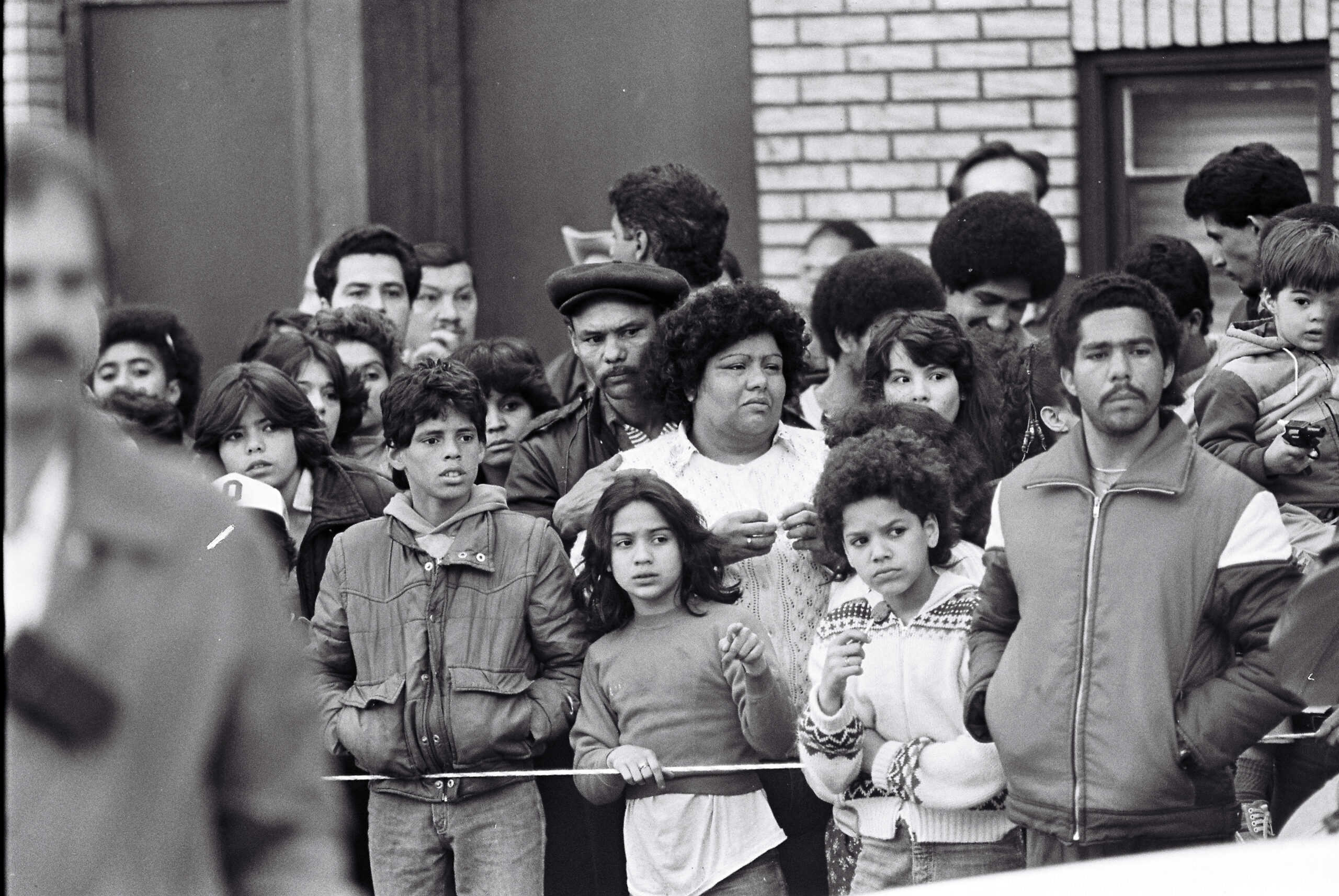
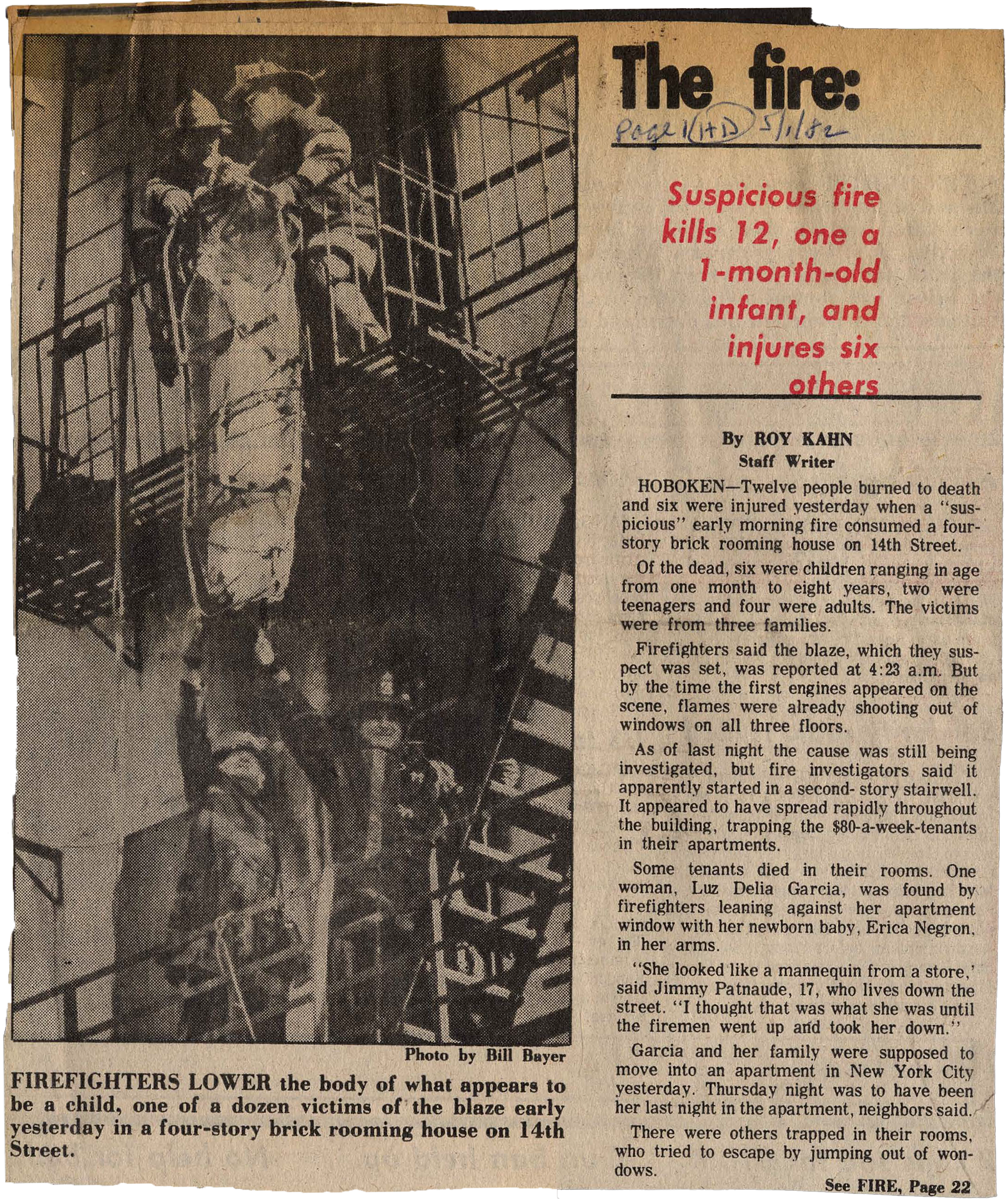
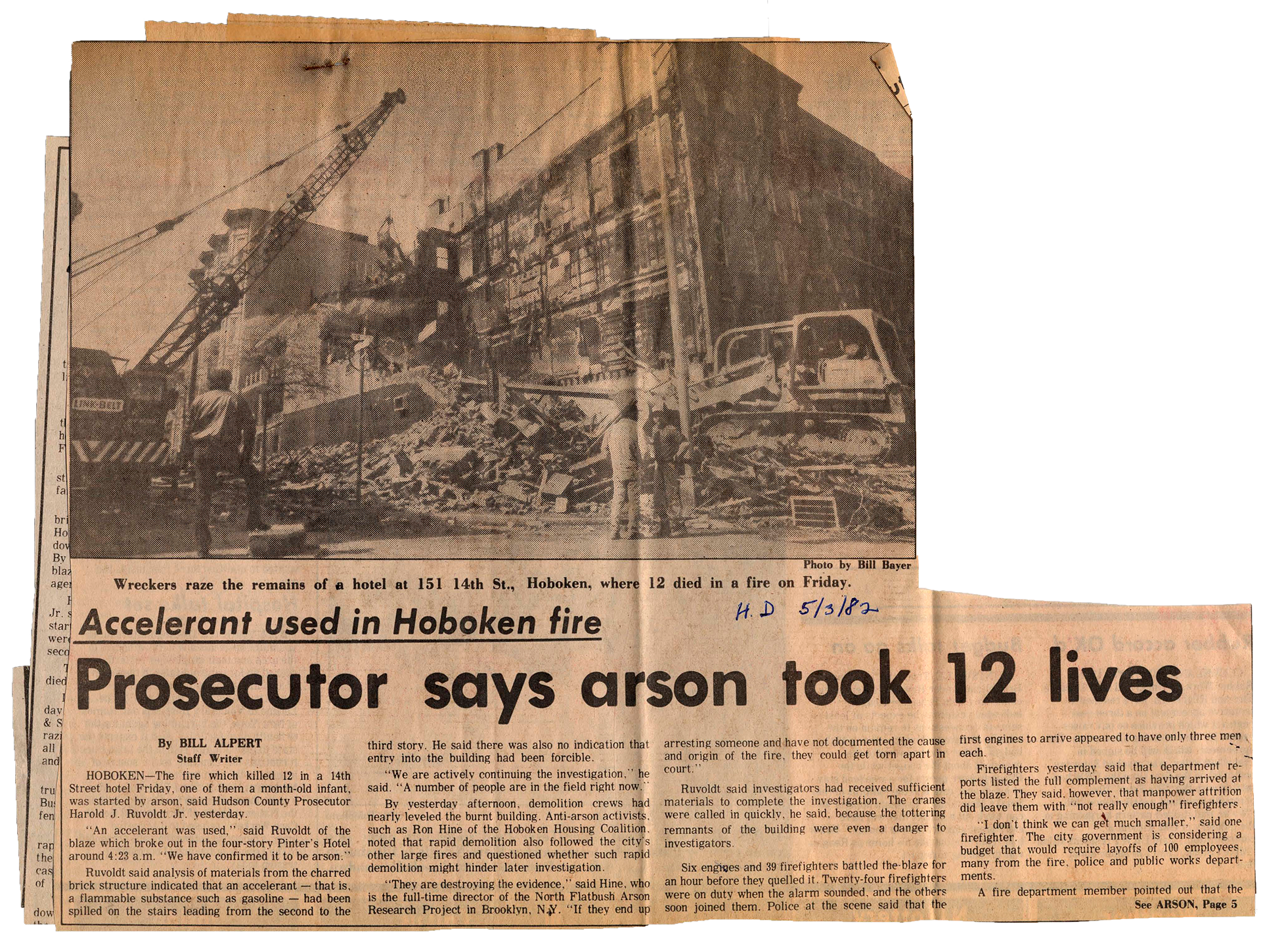
Pinter Hotel, 1982, Bill Bayer for The Dispatch

That was not their first fire. It was my second fire and their third fire in Hoboken. I wasn't at the one in Madison Street, the one that happened during the day. It happened right before Easter. But until I saw for my self these news clippings and stuff, that's when I knew. I never knew about the gentrification until eight years ago.

Janet Ayala | Survivor, The Pinter Hotel

Certain smells, anytime we go to hotels, we don't wanna be above the 3rd floor. I can never live in anything above, like, you know...it just the effects of that tragedy. Knowing that we were in a fire 1 year and the next year, both tragic fires. That changed, altered our lives. Neighbors dying, the people, friends that we were hanging out with dying.That you just played with them yesterday and they're gone.

Carmen Tirado | Survivor, The Pinter Hotel Fire

How many times I called that police station in Hoboken, and they didn't wanna hear my mouth. I think I was probably 15, 16. Yo llamaba de cada semana, every 3 weeks I would call. You have anything yet for the Pinter Hotel fire? Who did that? Nothing. The case is closed.

Marisol Zenon | Family member of deceased, The Pinter Hotel Fire

The old Hoboken. It was so neighborly. Everybody said hi to everybody. We knew everybody. It was a large Hispanic community. Sometimes well, most of the time, I'll goto church on Willow because they give the Spanish Mass. The older ladies that are there, I know them well. My mom knows them well. And I feel that small community because that's all there is. I think they're all gone.

Nilda “Chicky” Figueroa | Witness, The Pinter Hotel Fire

We had no choice. We were affected by the fire. We didn't choose, but we can choose to keep going. We can choose to make a difference. We can choose not to let the decision of one miserable piece of shit make us ugly like that. I will always try to put my best foot forward no matter what I've gone through in life.

Maria Feliz | Victim, The Pinter Hotel Fire

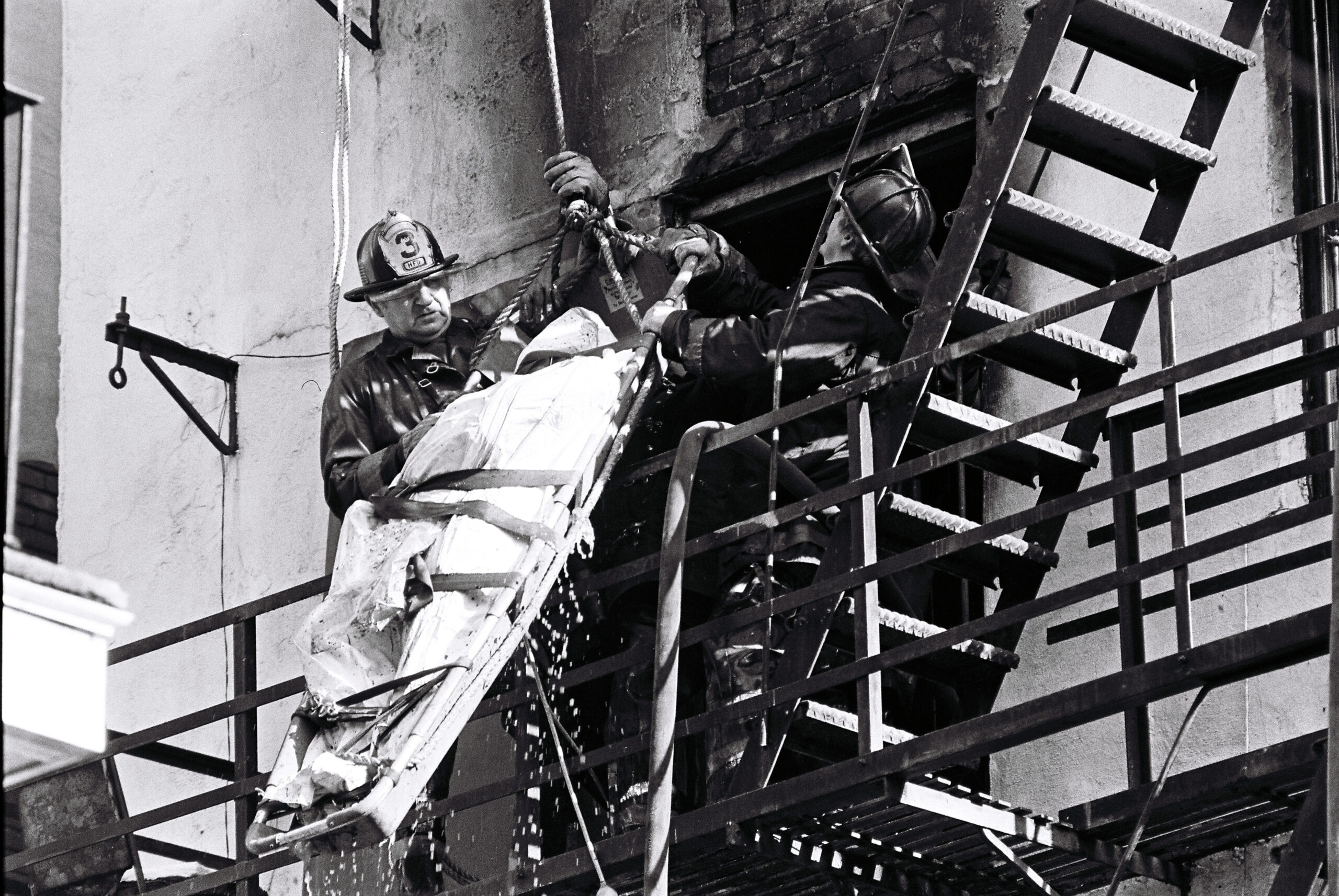
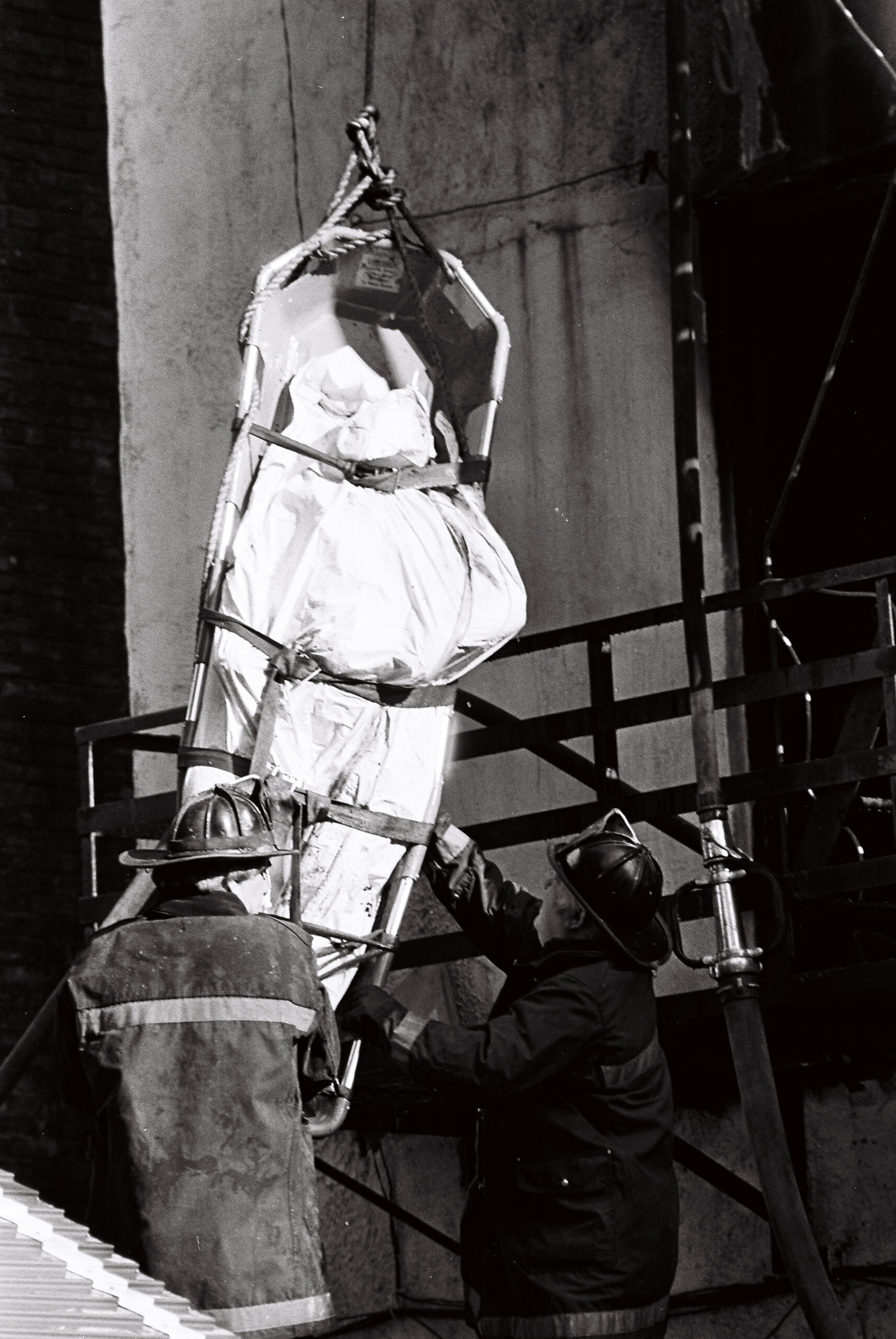
Pinter Hotel, 1982, Bill Bayer for The Dispatch

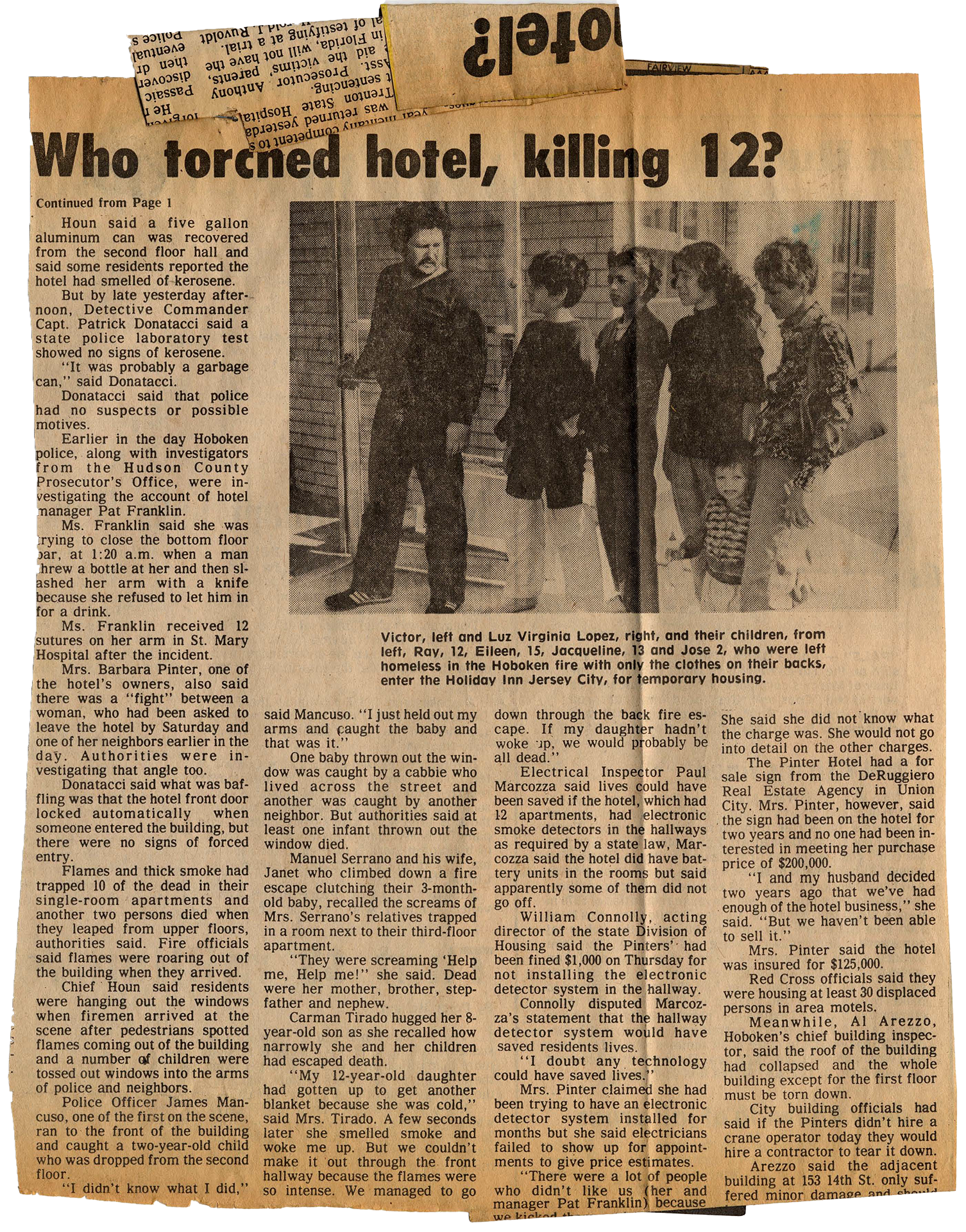
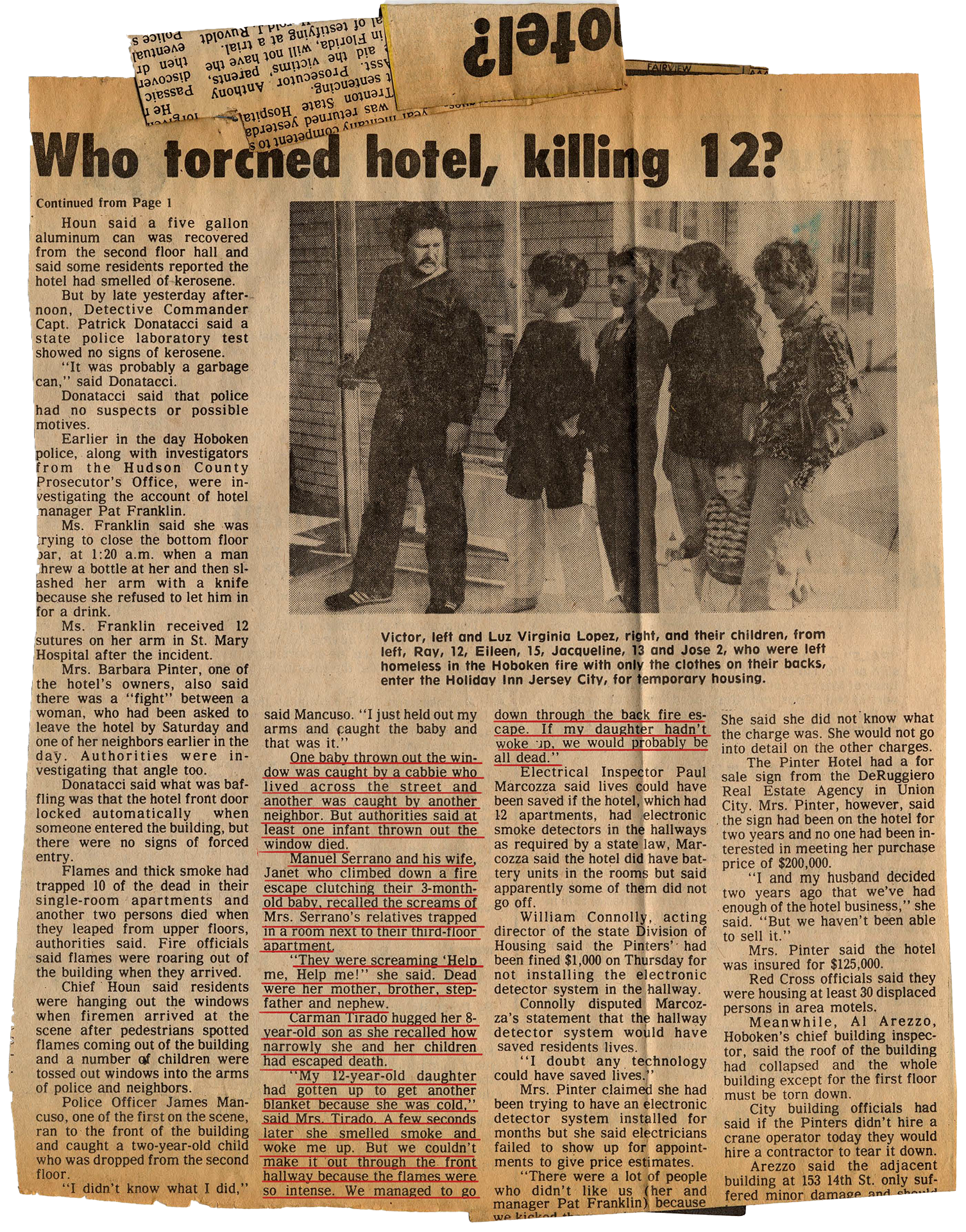
“Who torched hotel, killing 12?” Jersey Journal, 5 May 1982, p. 4.

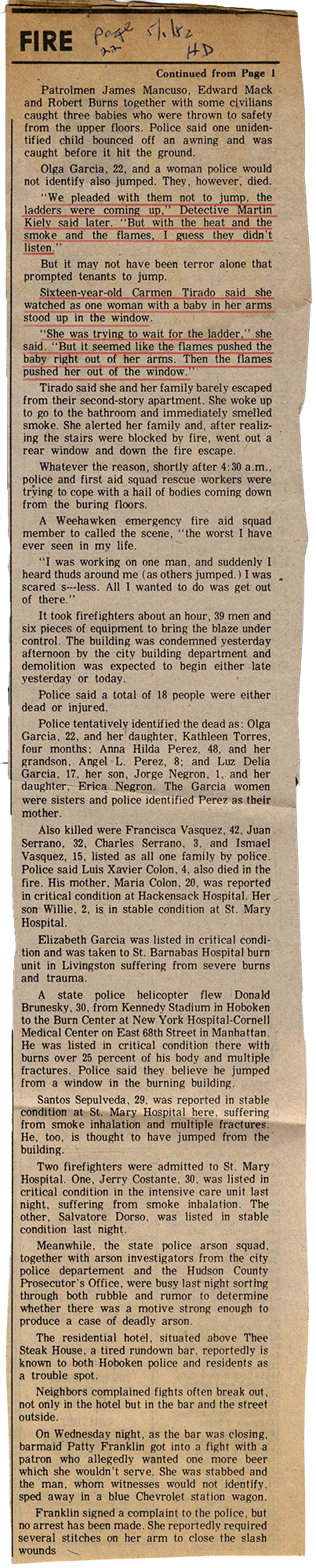
Jon Tirado was the neighbor described in the article who had caught a child thrown from the window saving its life. In our meeting he describes the terror that haunts him as he witnessed another child fall to the street directly next to him.

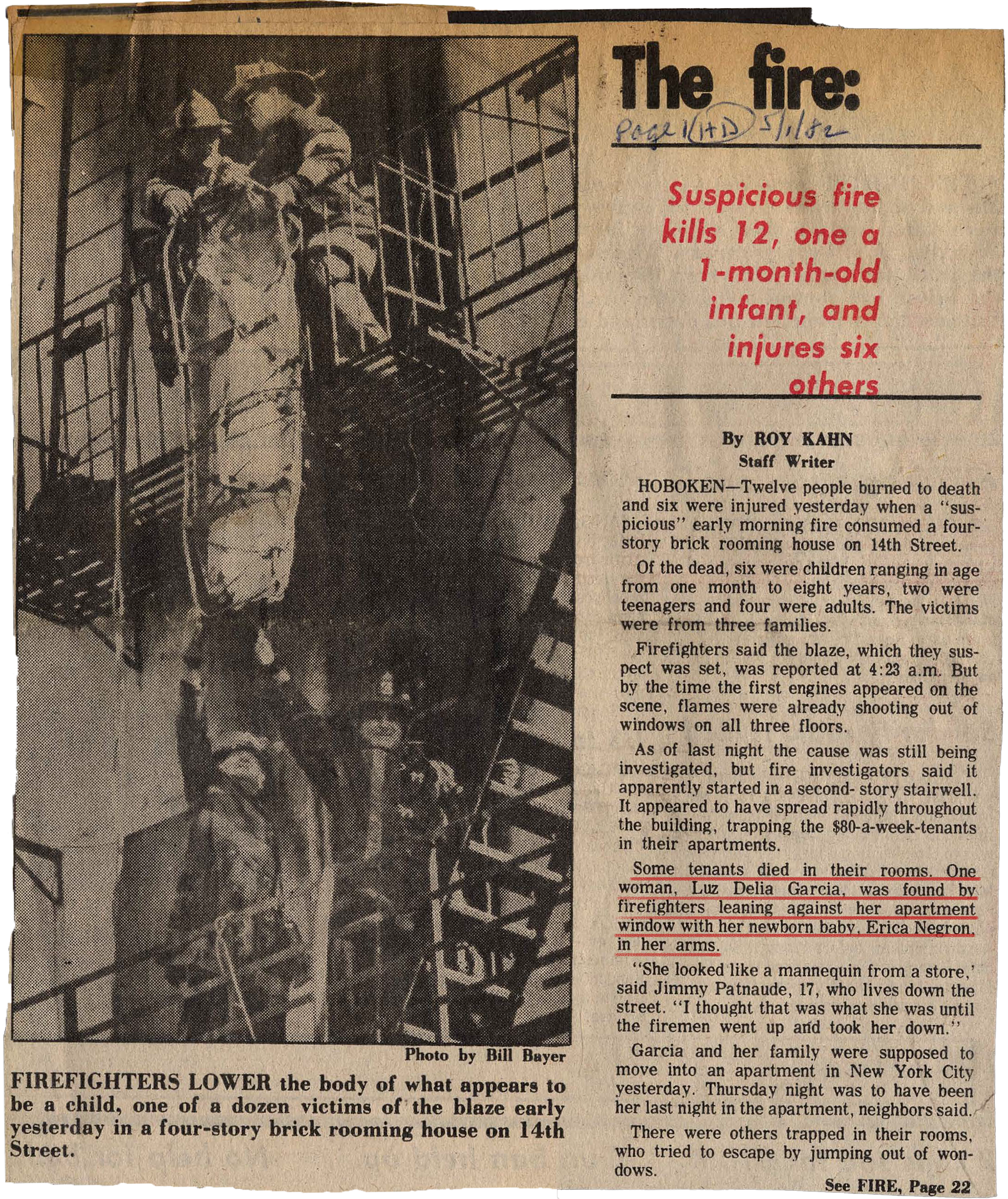
Kahn, Roy. “The Fire.” Hoboken Dispatch, 1 May 1982, p. 5.

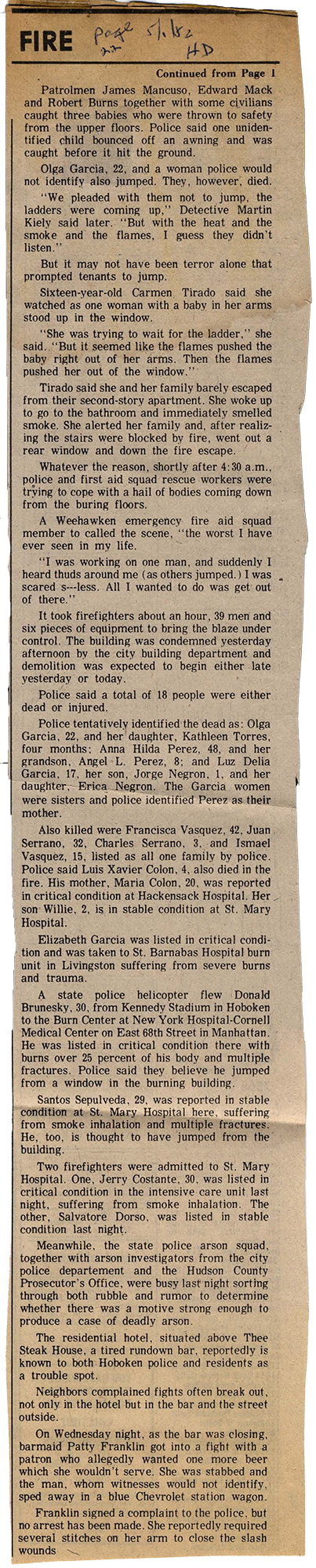
Hoboken Dispatch, 1 May 1982, p. 6.

Retired Fireman’s Story

Recorded on February 15, 2023; Transcribed and edited by Christopher Lopez

Keywords:

unforgettable |  fault | death | shock | disorientation | devastation | lack of support | trauma | concealment | fabrication | understaffed | cutbacks | integrity of civil service

Retired Fireman: [00:00:01] Two guys, a Spanish guy and one of the engine guys, prepared the ladder, brought it to the building the wrong direction, the heels. Just as they dropped it there, they were gonna put it up. They tipped the ladder because if somebody jumped. So they went to do something else. So I’m there, me and one firefighter, there’s a lady on the top floor. I’ll never forget this. She didn’t have a blouse on. She’s sitting on the window sill. Now that was a 28 foot ladder. We needed a 35. We didn’t have time to go back and get it. We went up. I really shouldn’t tell you this, but they extended the ladder upside down. So they they tied it with the lanyard, the only thing that could hold it in place. I’m calling direct in company. I need truck gear. I need an engine there. It’s really involved too much with the operation, but we were there. My fault too. Not paying enough attention. When we got there, it was up. I sent the guy up. I realized the ladder was upside down. He’s on the top. I said put a leg lock in, that girl’s gonna jump and knock you off the ladder. We missed the windowsill by that much because the ladder was a little short. We didn’t have time to go get another ladder. She could’ve slipped off, came down, Jerry could’ve got her, rolled off bounce off the awning on the street. The rest of the people in the building were there all perished. Eventually when we got in at the Top Floor, we started searching I’ll never forget this. Girl came to the Top Floor window, died right on the windowsill.

Retired Fireman: [00:01:48] Hung right over the sill and died. They went up and grabbed everybody, took them out. That was it. I thought one firefighter, he was in shock. Like, didn’t know what the hell and after it was over, he didn’t know what the hell was going on. I’ll be honest with you. It was really devastating. Devastating to the men there, and there was no critical incident debriefing at the time. You had to, like, suck it in. And the best thing you could do is go back to the firehouse and talk about it a little bit. Then the chief sends somebody down to us after we write all our reports up, what we did and why we did it. I really shouldn’t be telling you this, but I’m gonna tell you because it’s a fact. And one of the deputy to come and tell us,  changed our reports. I said, I ain’t changing nothing. We were short on guys. That was the bottom line. The big thing back then was cut back because it would save money. But they cut back to a point where you can’t do your job, and they detail a guy without replacing him that made a devastating difference in the first ten minutes of that fire. So he wanted us to, like I said, I’m leaving my report the way it is. And if he doesn’t like it, tell him to come down here, and I’ll give him a lesson in firefighting. And that was my answer to the deputy, and he never came back to the house again. Did you ever That’s the real story. It’s a little it’s not Sorry. Nice, but that’s how it happened.

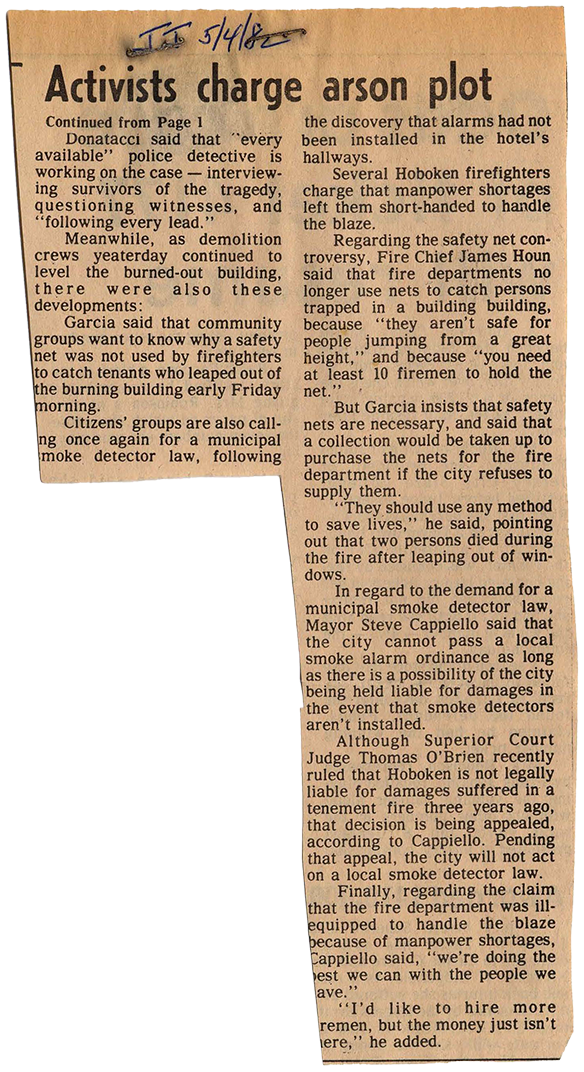
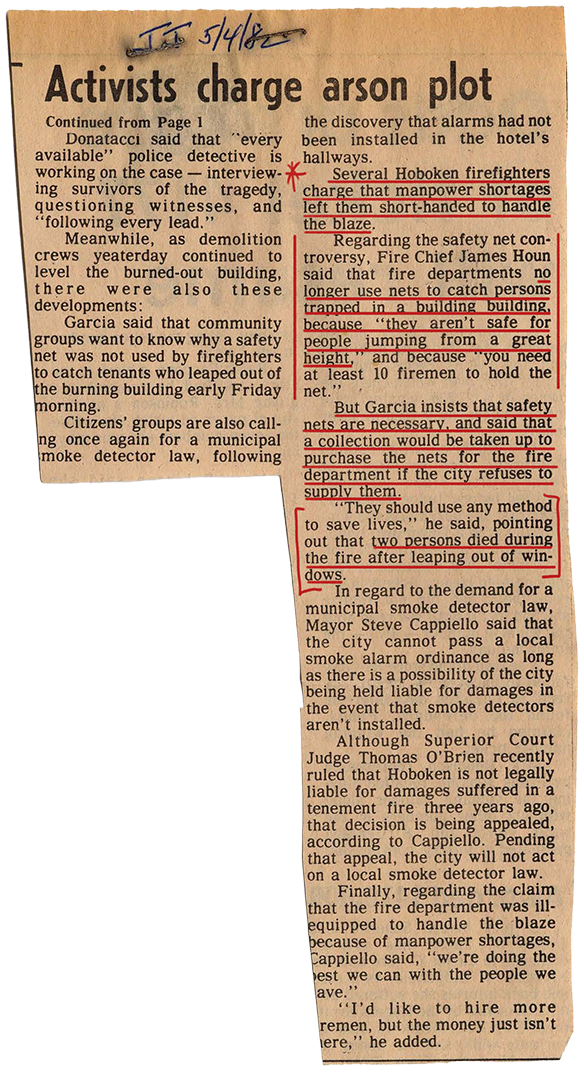
Activists charge arson plot.” Jersey Journal, 4 May 1982, p. 17.

Alpert, Bill. “Prosecutor says arson took 12 lives.” The Dispatch, 3 May 1982, p. 23.

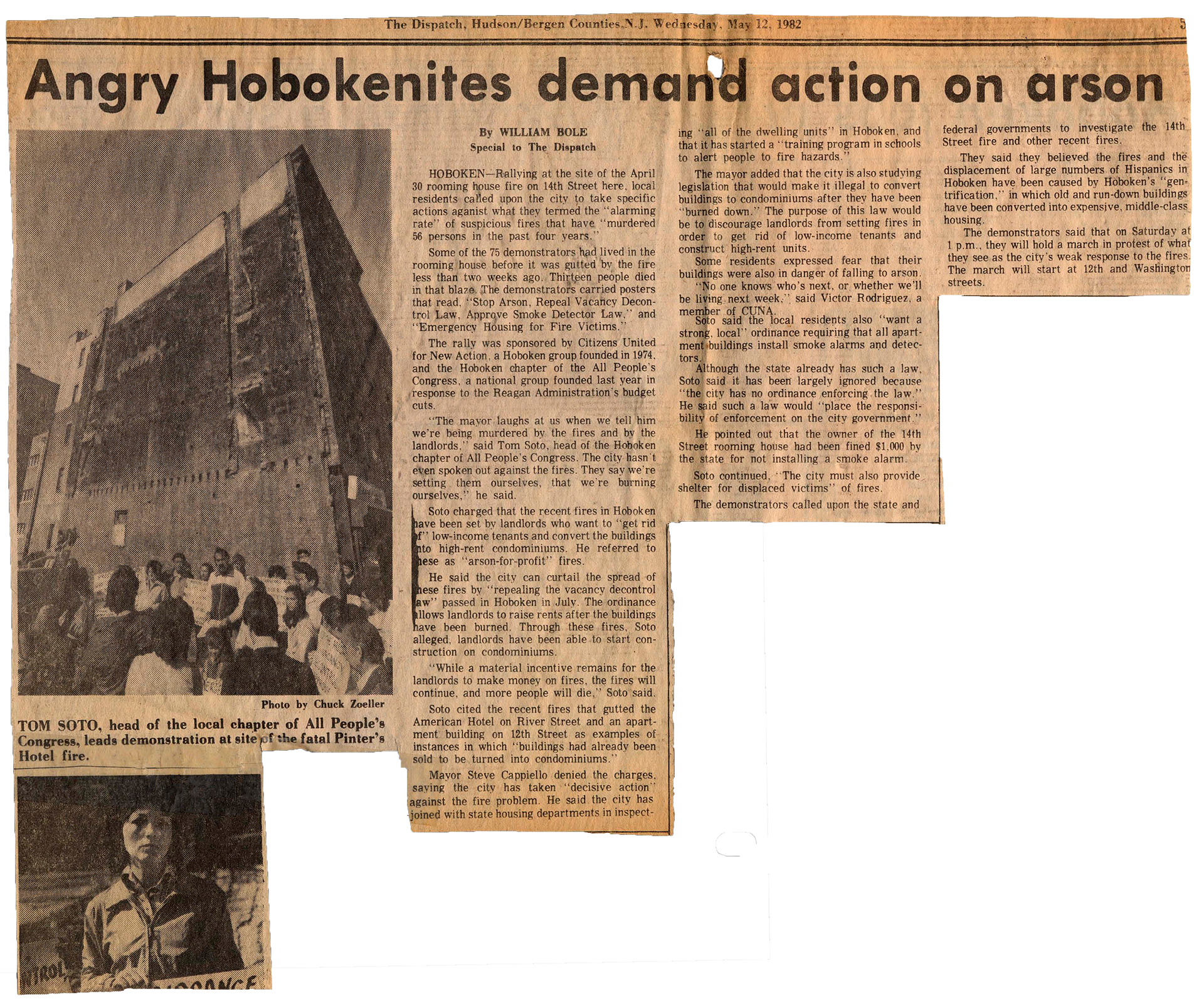
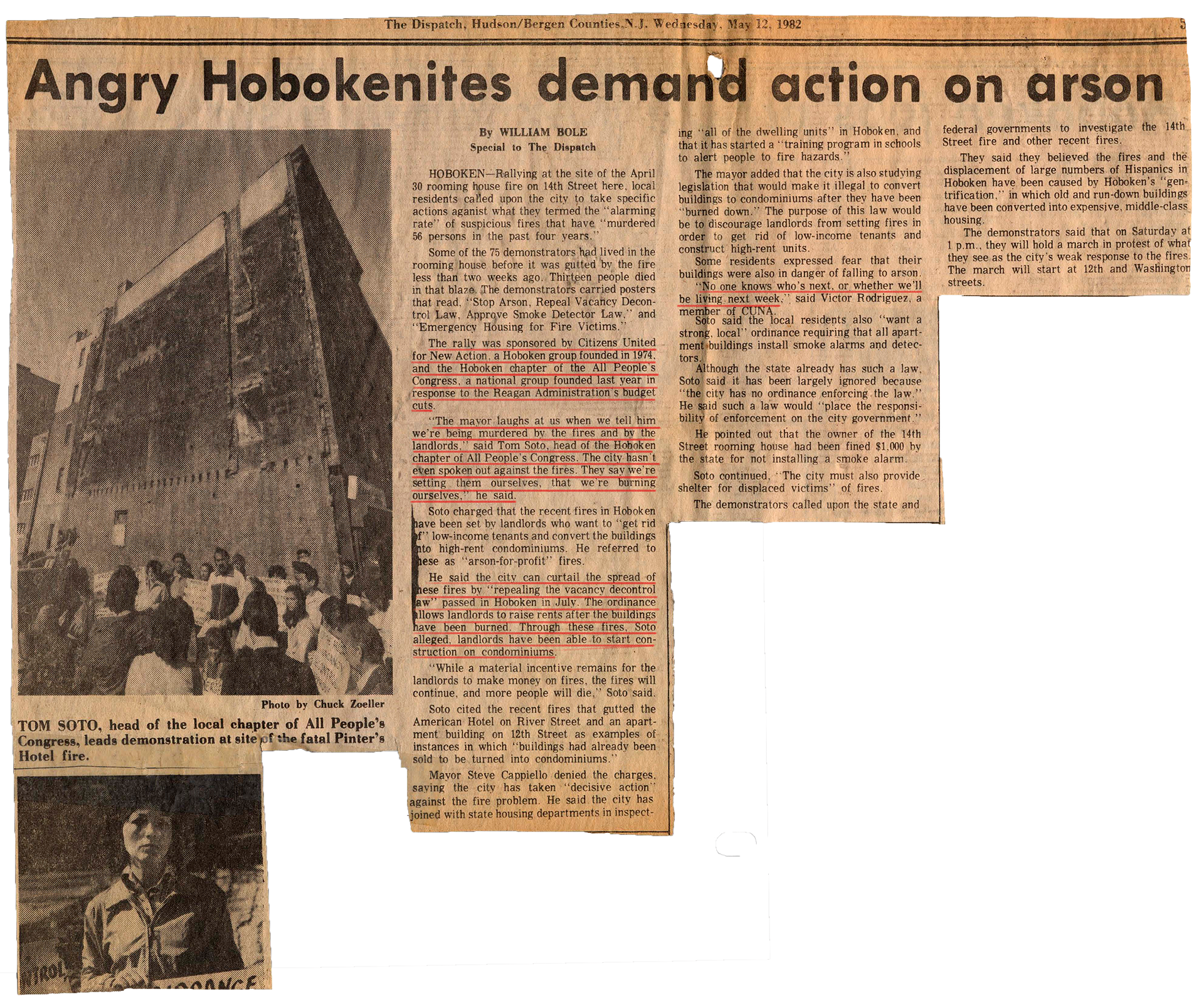
Bole, William. “Angry Hobokenites demand action on arson.” The Dispatch, 12 May 1982, p. 27.

Hoboken Is Burning: Yuppies, Arson, and Displacement in the Postindustrial City

By Dylan Gottlieb, PhD

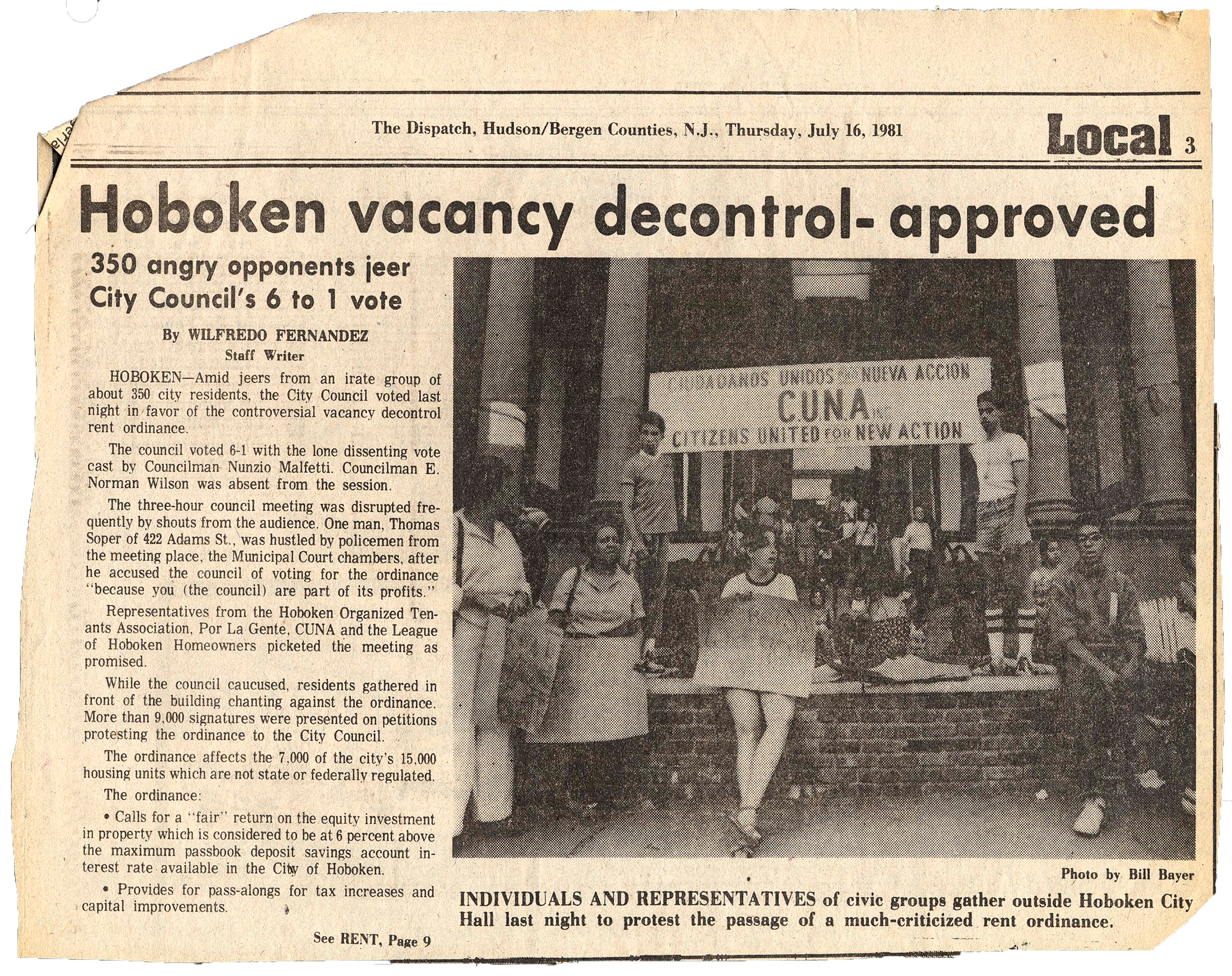
"In 1981 the Hoboken City Council passed two prodevelopment measures that made arson a more lucrative option than removal by renovation. The new rules weakened rent-control laws, and encouraged landlords to find a way—any way—to replace their low-income tenants with well-off renters. The first measure allowed a “hardship increase” that permitted owners to hike up rents if they could demonstrate that they did not make at least an 11.5 percent yearly profit from each unit. Even more pernicious was the vacancy decontrol law, which the council passed over the objections of tenants-rights organizations and a petition of opposition signed by nine thousand residents. It allowed landlords to raise rents to “whatever the market could bear” if rent-controlled occupants vacated their apartments. Owners could now dispense with the charade of capital improvements and shift their efforts to tenant harassment and intimidation. That year, arson became an almost daily scourge."

Fernandez, Wilfredo. “Hoboken vacancy decontrol-approved.” The Dispatch, 16 June 1981, p. 46.

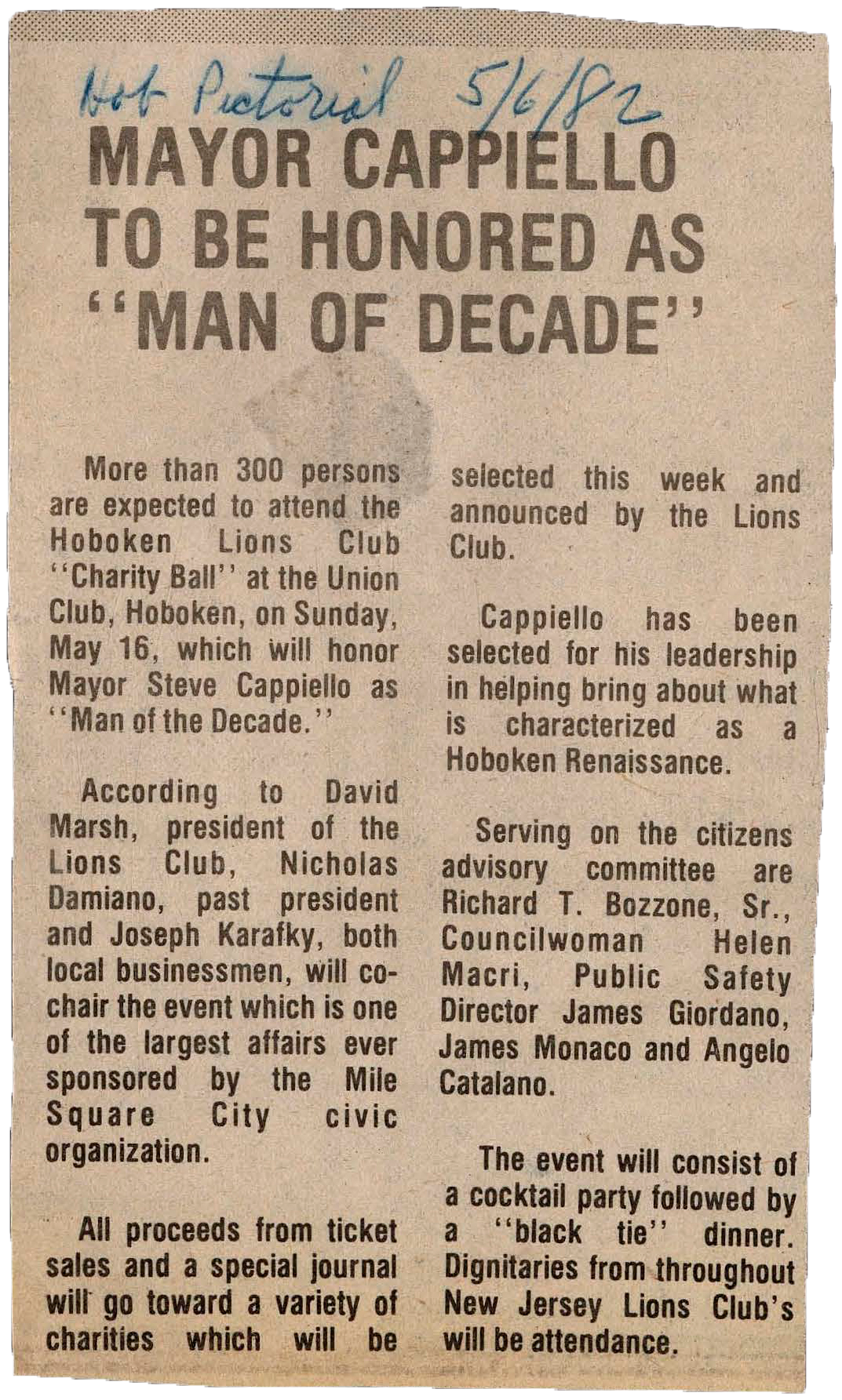
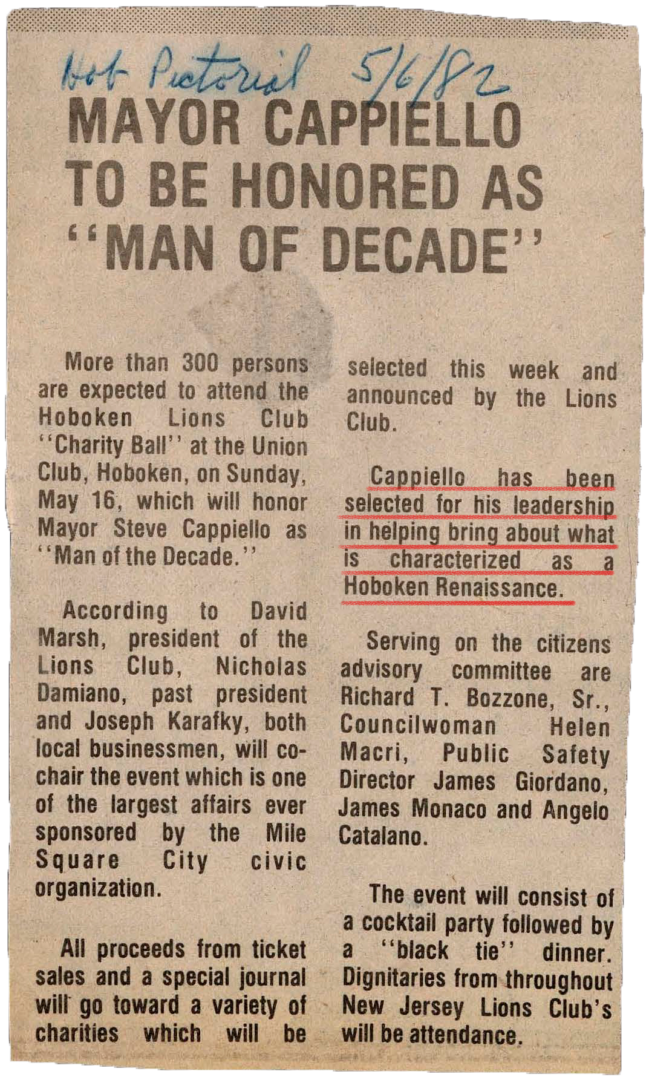
“Mayor Cappiello To Be Honored As ‘Man Of Decade'”. Hoboken Pictorial, 6 May 1982, p. 20.