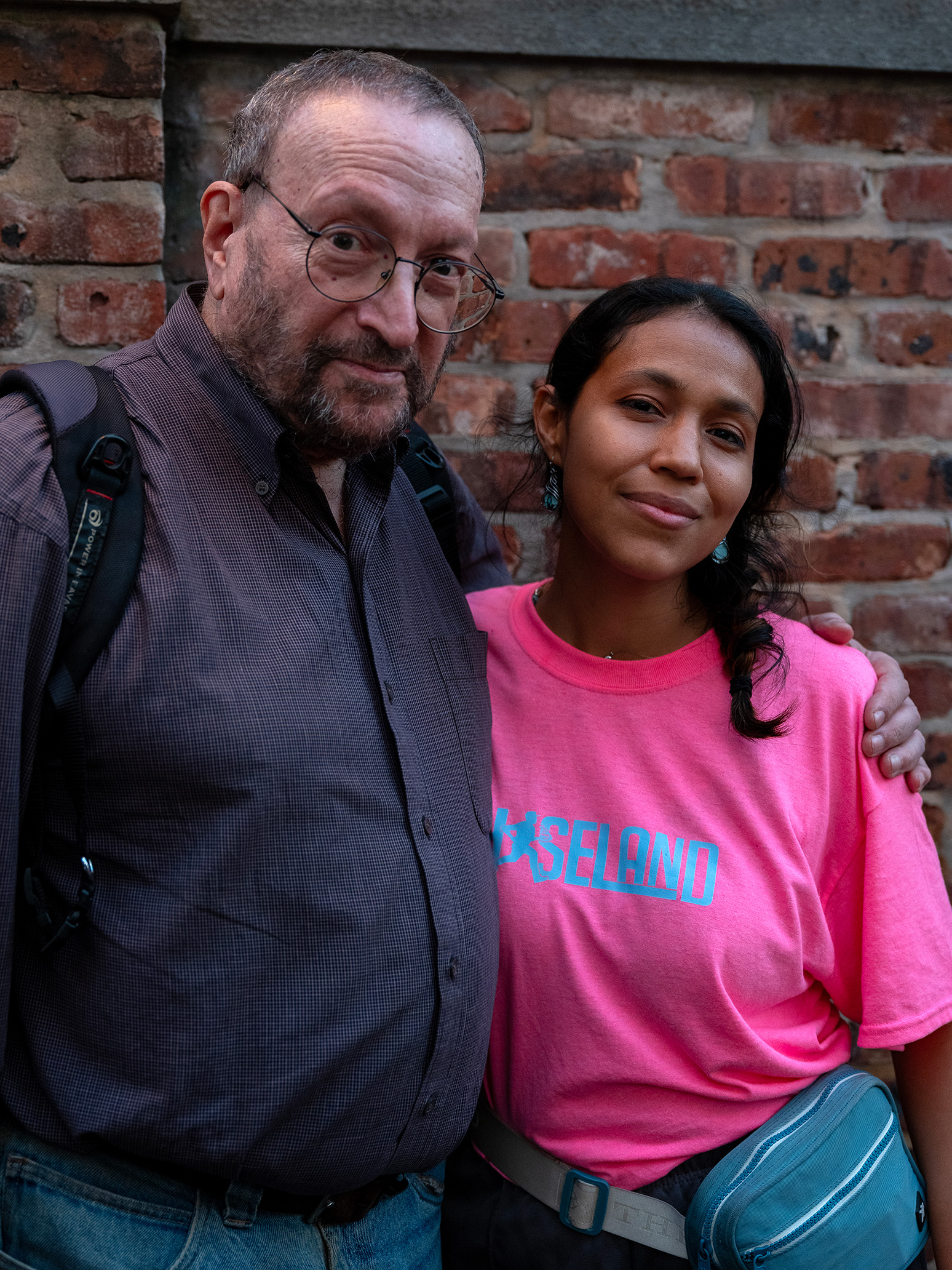
Carl Glenn
Title needed
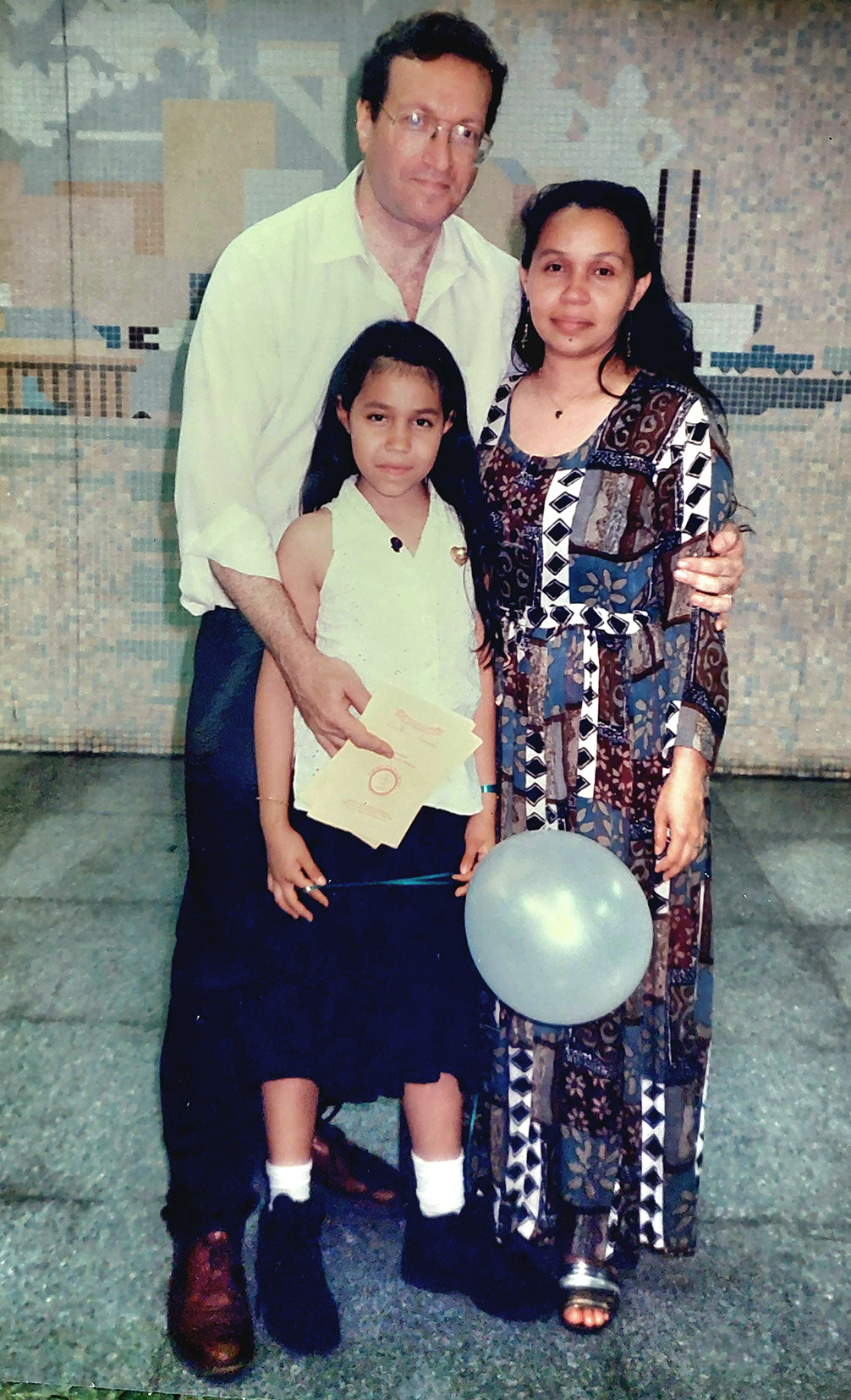
Carl Glenn was born in the Bronx to parents born to immigrants–on his father’s side Ashkenazy Jewish from Bessarabia, in what is now Moldova and on his mother’s side, Romaniote and Sephardic Jewish, from Ioannina, Greece. He moved to Hoboken in 1975 not long before Hoboken began morphing from a working-class industrial town to a wealthy commuter enclave. He moved into an apartment at 14th and Washington Street overlooking the Bethlehem Steel shipyard. At that time, he was working as a spotwelder at the Ford Mahwah Assembly Plant and the move to Hoboken shortened his drive to work. He was forced to move in 1979 after five small fires were set in a single month by a very careful arsonist, believed to be the building’s owner (the building is just a few doors down from the uptown firehouse). He relocated to a 5th floor walkup at 10th and Garden, where his family still lives. After eight years on the line at Ford, when the factory closed in 1980 he worked variously as a union organizer, bike messenger, editorial cartoonist, data-communications technician, war-crimes investigator, and web-content manager at the NYU School of Medicine.
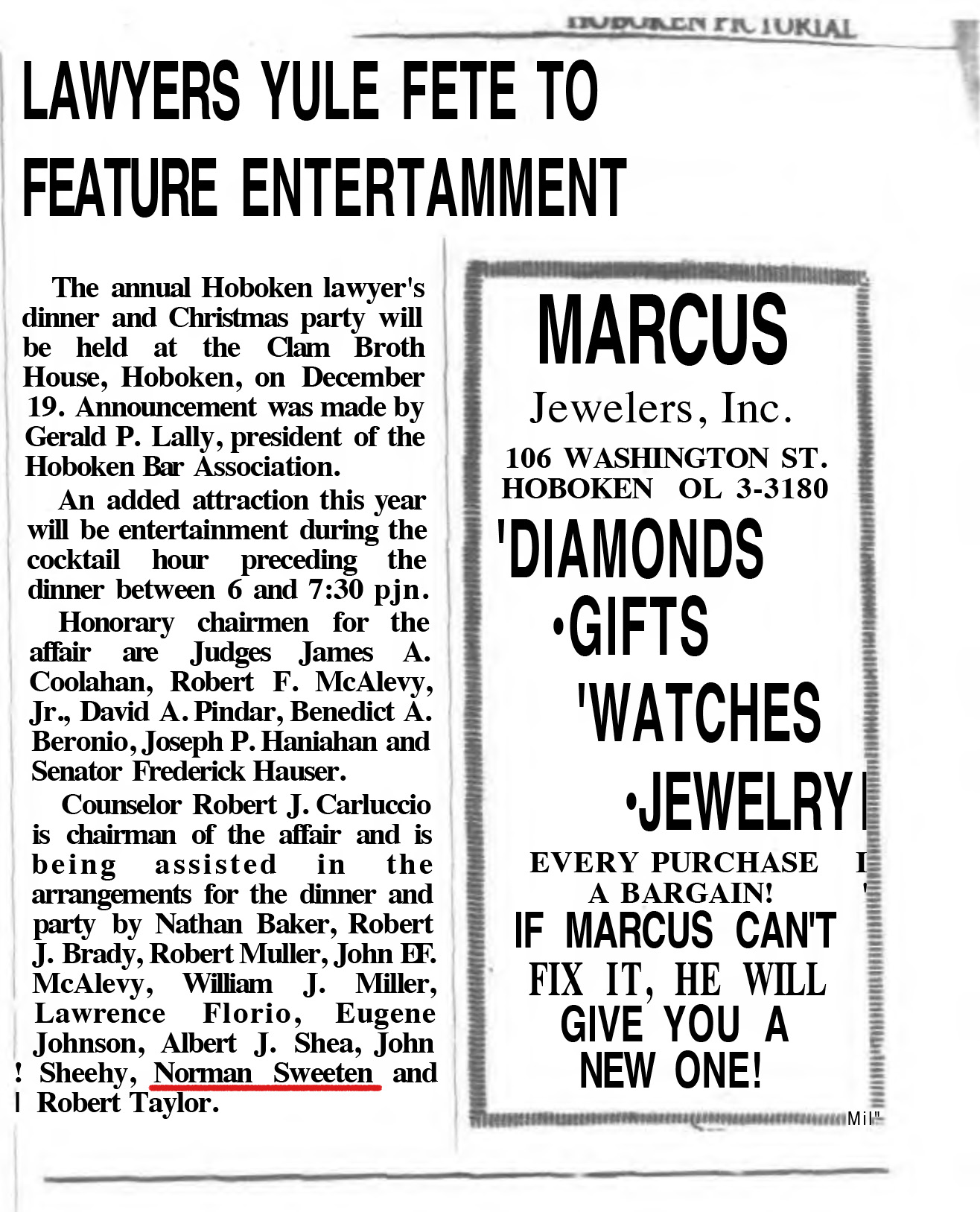
The man who owned the building was a man named Norman J Sweeten. He was, according to people in the real estate industry in Hoboken, the originator of the arson for profit campaign. He started out in life as a cop, then he became a lawyer, and then he became a landlord.
Carl Glenn
I moved out. He says, okay. There's a moot point. You may go. And, when I walked out, Sweeten walked down the corridor next to me, put his arm around my shoulder, and said, hey, Carl, you were always such a nice boy. You know? What happened? And I said, listen, Norman. You set 5 fires in 1 month, and most of the tenants in that building were children. He laughed. He said, oh, don't worry. Everything's okay. So, that was the last time I saw him.
Carl Glenn
Carl Glenn’s Story
Recorded on September 7th, 2023; Transcribed and edited by Christopher Lopez
Keywords:
Lipton Tea Factory | Maxwell House | Bethlehem Steel Shipyard |Washington Street | Norman J. Sweeten | arson for profit campaign | gentrify | real estate | evacuation | Red Cross | fear | death | importance
View Transcript
Carl: I moved into Hoboken in 1975. Someone gave me a phone number of, I don’t think it was directly to the landlord, it was probably to a real estate agent who found a place for me. At that time, it was very easy to find an apartment. And I moved into an apartment at, the address was then, 65 14th Street. There used to be a post office. I don’t know if the post office is still there on 14th Street between Washington and Hudson. It was across the street from the Lipton Tea Building. You know, there was a construction that exists now, but, at that time, on the other side of Hudson Street was the entrance to the Bethlehem Steel Shipyard, and the Maxwell House coffee plant was still firing away. The apartment that I lived in, I was on a third floor, the address now is on Washington Street. They rebuilt the entrance. But at that time, the entrance was on 14th Street. So I lived there until 1979. I think I moved out in April or May of 79. The man who owned the building was a man named Norman J Sweeten. He was, according to people in the real estate industry in Hoboken, the originator of the arson for profit campaign. He started out in life as a cop, then he became a lawyer, and then he became a landlord. A little background on him, I got from a real estate agent. I was walking on Washington Street, the west side of Washington Street, walking north. Must have been sometime in the mid eighties or maybe in early nineties. There was an open house at a real estate agency. You know, one of the old ones. The door was open, lots of people, there were soft drinks and hors d’oeuvres, and somehow, I walked in there and started chatting with some of the people, you know, just out of curiosity. And one of the agents, a very friendly guy, I don’t remember what the occasion was for the open house, they may have just reopened the office. This was not Severino or McCormick. I don’t remember which one it was, but it was one of the ones that has been around for decades. I told him about my experience, at 65 14th Street, and which I’ll get to in a moment. And he said, oh, Norman Sweeten, that guy was out of his mind. I said, oh, you knew him? He said, yeah. We used to play golf together. And he was the one who brought to his real estate cronies the idea of setting fires in buildings, occupied apartment buildings in order to drive out tenants to gentrify. He was the originator. Now, before I moved in 1979, about a year or two before then, there was, I don’t know if it was a hurricane or a tropical storm. Some flash flood, sudden downpour hit Hudson County and I was in the building. It was late at night, and most of the tenants in the building were children. There were a number of families of single women with multiple children. I was friendly with all of them, or everyone that I knew in the building. One kid came down knocked on my door and said, mister, come out, and I saw that there was water pouring down the central stairwell of the building. I walked up a couple of flights and I saw that water was pouring in from the roof and that the drains around the retaining wall on top of the roof were clogged and the roof was filled with water. And so, I called 911 and reported an emergency. The fire department came and evacuated the building. It was the only building in Hudson County to be evacuated that night. They put us up in a Red Cross, under Red Cross auspices, at one of the hotels. There were two SRO’s or hotels down near Hudson Place by the pantry. I spent the night in one of those beds. And that’s just as an illustration of the level of care that Sweeten gave his building. So that must have been maybe a year before the fire started. One month before I moved out, Sweeten started setting small fires.
Chris: What makes you say that?
Carl: Okay, what makes me say that? Yes, that’s a serious accusation. The entrance was on 14 Street, but the building was right around the corner from the Hoboken Fire Department.
Chris: That’s right.
Carl: There was a fire station there, and there was, I don’t think he was a chief, there was a guy with, well, he (Sweeten) was very friendly with people from the fire department, probably going back to his police days. But I don’t wanna say anything that I can’t prove. I say that he set the fires because they were small electrical fires in a utility space, near the entrance to the building. They were enough to scare people, but not do a lot of damage. So I saw the handwriting on a wall, and I started looking for an apartment. I stopped paying rent. I didn’t pay my last month’s rent and I finally moved to the apartment that, Namibia (Carl’s daughter) is still living in now. At that time, there was a realtor on Washington Street named Maj. I forget her last name. She was a real character. An obese woman, very heavily made up. She was a character. And, she gave me a list of 10 apartments, and one of the apartments was the one I moved into. It was $90 a month. Just to give you an idea of rents in those days. $90 a month for a 4 room railroad apartment. When I got there, and when I saw $90, even at that time, I said, gee, this must be a rat’s nest. So I went there last, after I went to all of the other places. They were either above a bar or, there was something undesirable about them, but they were all, you know, in the $100 to $150, $175 range. The apartment that I was renting at 65 14th Street was $113 a month. There were parquet floors, glass French doors, it was a beautiful apartment. There was a view of the New York skyline over the Bethlehem Steel shipyard.
Chris: And we’re talking 1979 now, right?
Carl: Yes, 1975 is when I moved in. I’m just giving you all this background to fill in some of the general sense of what the rents were like at this time. The population was, I think, 60,000 and, I think 60% of the population demographically was Puerto Rican. Then there were the Irish and the Italians. But there were, groceries and lunch counters up and down Washington Street where you can get a meal for a $1.35. Rice and beans and carne guisada or, you know, something like that. So this was what Hoboken was like at that time. The fire department was always there within seconds of the alarm going off. That was something else that made me feel confident that these were deliberately set fires. Also, the frequency of the fires before I moved out, 5 in 1 month.
Chris: So you said that they were smaller electrical fires. Where did the fires take place?
Carl: There was a utility closet down near the entrance at 65 14th Street. I haven’t been in the building since they rebuilt it, they put the entrance on Washington Street. I don’t know how much of the structure has changed, but there was an area where small fires could start and be contained and not do a lot of damage.
Chris: Explain to me again what you’re saying about the fast response time?
Carl: It was evidence, circumstantial evidence, that Sweeten knew that he could set fires or, have fires go off in the building or if fires went off in the building without even making an accusation, that the fire department could be there fast enough that it wouldn’t damage his property, but it would scare the residents into moving out. So, I moved out. And then a couple of months later, I got a call. He sued me. He took me to court for nonpayment of rent for last month’s rent before I moved out. And, at that time, there was a progressive lawyer. He ran for mayor one year. This was I think after Vezzetti. He had an office in the building across the street from the post office down near the path train. An older guy, I don’t remember his name. Now Cheryl Fallick and, Rusty who also lives at 931 Garden. That’s how I know. He (Rusty) moved in years after I did, but he has been active with the Hoboken Fair Housing Coalition. Yeah. And he probably can, he might be able to to help out. He’s a progressive guy and very pro tenant. Cheryl and Rusty can probably dig up his name. But he told me, you know, I saw him, and I told him my story and he said, alright, no charge for this consultation. Tell him you’re gonna use the Mariani defense. So he gave me some defense. He said, don’t worry. You don’t have to know anything about it. Just tell him that that’s the defense you’re gonna use. It wasn’t exactly Mariani, but I can’t remember whose name, this decision, is made famous by. But in any case, I went to court. Sweeten called me to court and I went to the housing court in Jersey City where the trial took place. The scene was a remarkable one because as I sat in the benches in the courtroom, Sweeten was walking in and out of the judge’s chambers. The judge was on the bench. There was no one in the judge’s chamber. He was sitting on the desk using the telephone, just marching in and out like he owned the place. And so, my case was called, and the judge said, well, you owe mister Sweeten, a month’s rent. I said, I don’t believe I do, and I explained what had happened. And he said, well, are you living there now? I said, no. I moved out. He says, okay. There’s a moot point. You may go. And, when I walked out, Sweeten walked down the corridor next to me, put his arm around my shoulder, and said, hey, Carl, you were always such a nice boy. You know? What happened? And I said, listen, Norman. You set 5 fires in 1 month, and most of the tenants in that building were children. He laughed. He said, oh, don’t worry. Everything’s okay. So, that was the last time I saw him.
Carl: Now there’s another story that I wanna tell you. I had a job in Panama, in 1990. Shortly after, the US invasion of Panama. And I was working as a translator interpreter. I had some kind of a job there for just a few weeks. Long story short, I met Namibia’s mother. Namibia was three and a half at that time. And, we got married, and they moved, from Panama to Hoboken, New Jersey. When Namibia was, 7 years old, I think she must have been 8 years old. I think she was in the 2nd grade. This must have been or maybe still in the 1st grade that this was, shortly after the beginning of the school year. So, it was probably the fall of ‘93. She was invited to a birthday party on a Sunday afternoon. I had an apartment all the way back, near Madison and, 3rd or 4th, which at that time, you know, was, the Wild West of Hoboken. Wild West in the sense that it was, you know, they yuppies hadn’t begun inhabiting Hoboken yet. And, the rents were were cheap. There was a large immigrant population. And the friend who had invited Namibia to her birthday party, I guess it was her 8th birthday, was a Mexican immigrant. Her mother didn’t speak any English. And so I accompanied Namibia, and she played with her friend and, you know, a half dozen or so, little kids there. And we left. It was probably a week or two later that the building burned down. The fire started during the night. The child survived because her mother protected her with her body and died. The child had burns over a large proportion of her body. I don’t remember the exact proportion. I don’t remember their names. I don’t think Namibia remembers either. It was, you know, she was quite young, and she was just learning English. That was, at the height of the arson for profit. And those people were burning children alive to make money. That’s why I was so glad that Nami told me that, you were, researching this because this is so important. For people to know the truth about the blood and the horror that made the beautiful modern city of Hoboken today what it is.
That’s why I was so glad that Nami told me that you were researching this because this is so important. For people to know the truth about the blood and the horror that made the beautiful modern city of Hoboken today what it is.
Carl Glenn